Tuesday, January 8, 2019

The Athenians Leave Sicily

In 415 BCE, during the Peloponnesian War, Athens sent a large expeditionary force to attack Syracuse, in Sicily, believing they could conquer the entire island and finally win the war against Sparta. They failed, and few survived.

He sat on the beach, legs drawn up, his heels making sharp indentations in the moist, sucking sand; the water seemed limitless before him, the land limitless behind. He watched the cumulus clouds on the horizon grow and recede, exploding to immense heights before dissolving into wispy remnants.

There were moments of absolute stillness, when even the insects paused, between the blasts of wind from offshore that blew the greasy strands of hair from his face and dried his sweat while depositing a fine grit in the corners of his eyes and mouth.

He looked to the east. He could almost smell home on that wind from the east, almost see, if he squinted just so, the cloud-topped mountains to the east, even hear, ever so faintly, the echoes of sounds from beyond the horizon. As the yearning quickened, the defeat became manifest; Athenian moderation could not manipulate Syracusean excess. He picked up his bronze from the beach — there would be more battles, on other shores — and walked toward the ships. It was time to go home.

Monday, November 19, 2018

Going to Vietnam

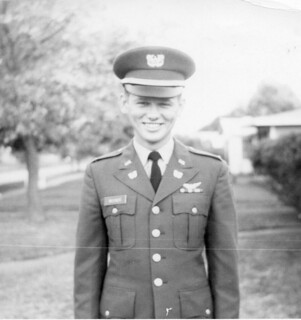
Last year marked the fiftieth anniversary of my joining the Army. Thus this year, today, marks the fiftieth anniversary of my arriving in Vietnam.

The year in between was hectic. First there was two months of basic training at Fort Polk, Louisiana. Then ten months of flight school, at Fort Wolters, Texas, and Fort Hunter-Stewart, Georgia. On October 21, 1968, when I was all of 19 years old, I got pinned with my warrant officer bars and the next day received my Army Aviator wings and my orders to show up at Travis Air Force Base, California, a month later.

November 1968, home on leave in Texas before going to Vietnam Headed to Vietnam

For a year drill sergeants and TAC officers had berated and humiliated us, calling us the vilest of names. Then I showed up at Travis AFB and it was all "yes, sir" and "no, sir" and politeness and deference. They even said "please" when they asked me to be there two hours before my flight to Tan Son Nhut.

I am old and have forgotten so much in my life, but I remember quite distinctly the unsettling mixture of anxiety and resignation I felt as I boarded the airliner. Of course I knew before I joined that all Army helicopter pilots went to Vietnam but now I was facing the stark reality that it was my time to go.

It was to be a long flight. Travis AFB to Alaska. Alaska to Wake Island. Wake Island to Japan. And finally Japan to Saigon. Lots of time to think, and many of my thoughts came back to a poem by W. B. Yeats, about an Irish pilot in World War I, that distilled my confusion of emotions and feelings into 16 short lines. I've read this poem hundreds of times, before, during, and after my year in Vietnam and each time I marvel at how well Yeats laid out my state of mind.

An Irish Airman Foresees His Death
 by William Butler Yeats

 I know that I shall meet my fate
 Somewhere among the clouds above;
 Those that I fight I do not hate
 Those that I guard I do not love;
 My country is Kiltartan Cross,
 My countrymen Kiltartan’s poor,
 No likely end could bring them loss
 Or leave them happier than before.
 Nor law, nor duty bade me fight,
 Nor public man, nor cheering crowds,
 A lonely impulse of delight
 Drove to this tumult in the clouds;
 I balanced all, brought all to mind,
 The years to come seemed waste of breath,
 A waste of breath the years behind
 In balance with this life, this death.

Saturday, January 13, 2018

End of an Era

For twenty years Terri and I traveled, several trips every year. Then, in 2017, we went nowhere. There were several reasons for this abrupt halt, none of them especially interesting, and only one that truly mattered: American Airlines radically changed their frequent flyer program. The old system along with regular fare sales tempted us to fly frequently and far; the perks that came with status (most years we were Platinum) made the ordeal of flying semi-bearable. 'Status' has unfortunate connotations of social arrogance, but in the realm of air travel it means an array of specific, highly desirable benefits: better seats with more legroom, boarding priority, lounge access, upgrades on domestic flights, and more award miles.

AA raised the costs (both of airfares and the requirements to achieve status) while significantly reducing the benefits. So we have to ask ourselves, having to pay much more for a lot less, why bother?

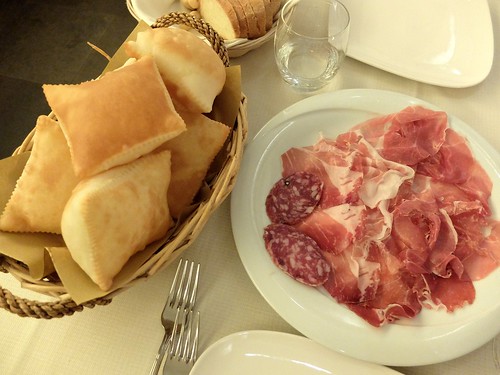
As luck would have it, Terri found cheap fares to Milan with a return flight a day before our current status expires. So, on Monday we're off for two weeks in Italy, with stops in Piacenza, Modena, Mantova, and Cremona. These are not tourist hotspots and the weather will be cold, but there will be plenty of things to see and do. And of course we'll be eating--as I've written before, eating is one of the main reasons to go to Italy. Who can resist a basket of puffy fried bread and a plate of cured meats? And that's just for starters.

Fried Bread and Cured Meats

Click on the image for a larger view on Flickr and more details.

This won't be our last trip but we'll never travel again as much as we once did. We'll be more selective about when and where we go, and how we get there.

Tuesday, October 24, 2017

I Join the Army

On this day in 2017, I become undeniably old, because on this day in 1967--fifty years ago!--I joined the Army.

January 1968: WORWAC

Click on the image for a larger view on Flickr and more details.

Fateful incidents customarily occur on cold, grey dawns, but it never was cold in Houston, and the grey, of a decidedly greenish cast, was only smog. So 'twas on the muggy, polluted morning of October 24, 1967, that I reported to the Federal Building in Houston to be shipped off to Basic Training at Fort Polk, Louisiana: slowly up, up the imposing granite steps, into the echoing hallways, up some more stairs, down another hallway, at last finding and entering the waiting room of the Armed Forces Entrance and Examination Station.

I was sitting there, waiting, alone (as were the twenty-odd others with me) in the assigned room by a few minutes before 7 a.m. I brought what I had been told to bring: a small overnight bag containing two changes of underwear (preferably clean, the sergeant had gravely told me the week before) and a few toilet articles (the Army's name for soap, toothbrush, comb, deodorant and razor; "No goddamn straight razors, either!"), and a small amount of spending money--$2.78. I also carried a copy of E. V. Rieu's translation of The Iliad; what could be more appropriate, I thought, to brace me for what was to come? No one had told me that I could or should bring a book, but then, no one had said that I couldn't or shouldn't.

The AFEES, on the third floor of the Federal Building, was absolutely characterless, much like any other office complex in the governmental bureaucracy. It was reasonably clean, neither pretty nor ugly, oppressively neutral. The clerks, civilian and military, seemed to do little work. Occasionally papers would be shuffled, typewriters typed upon, coffee drunk, moronic jokes quickly told and laughed at. It was drab. All the senses languished for lack of input, groping for some little bit of data, however insignificant, that could be sent to the brain for study, assessment, and storage. The place looked drab, smelled drab, felt drab, sounded drab, and, had I the temerity to bite a wall, would have tasted drab.

Around 8 o'clock the twenty or so of us who had shown up that day were taken out of the waiting room to a long hallway, where we sat on narrow wooden benches. Once in a while someone would come up and call out names, hand out pieces of paper, or lead one or another to still other rooms and hallways to sign forms.

At noon an officer guided us to a room that had a little podium and an American flag in one corner. He stood behind the podium, we faced toward the flag, he mumbled and we repeated some words about fighting and defending, we took a step forward. After the ritual was complete the first glimmerings of an expression showed in the officer's face, gradually taking the form of a thin smile at once full of both sarcasm and pity. He looked at us, shook his head from side to side, let out a sardonic sigh, and walked away. We were now legally, morally, administratively, and for-better-or-for-worse in the United States Army.

Between 12:30 and 12:37 we were served what I loosely call 'lunch.' Each person received a small white cardboard box containing what can be described as food only because we were told to eat it, which we did not. The rest of the afternoon was spent on the aforementioned benches, broken by trips to the water fountain or rest room. Once in a while my stomach growled.

About sundown (I guess the civilians decreed that we had better be out of town, or else) we were led out of the building and down the street a few blocks to the Greyhound bus station. There was a thirty minute wait, so we promptly raided the Coke and candy machines. The bus came, we boarded, and off we set for Fort Polk.

I remember very little of the trip even though it was several hours long and went through areas of East Texas and Louisiana I had never seen before. Besides, it was dark. I had a window all to myself out of which I incessantly gazed, musing upon Life in general and my own in particular.

We arrived, a bit drowsy, at Fort Polk a few minutes after midnight. Slowly stirring ourselves out of our seats, we were startled into fearful alertness by a young punk-faced corporal who leaped into the doorway of the bus.

"Awright you cocksucking goddamn motherfuckers! What the fuck ya'll think this is, a fuckin' resort hotel? You slimey-assed bastards got five goddamn seconds to get off this fuckin' bus! MOVE!"

Move we did. What his address lacked in delicacy it more than made up in vigor. We scrambled and clawed over each other to get off the bus, where the corporal directed us, in his own colorful fashion, to the far side of a very large, empty parking lot. Instead of being marked to accomodate vehicles, however, the asphalt had on its surface row after row of short white lines, about three feet long, each with a different number, starting with 1 and going on to four or five hundred. As last names were read off a list we were told what number line to stand behind. I was 23.

After we were settled in our places we received a formal greeting to the fort. The corporal had been merely obnoxious, a pubescent bully, whereas the sergeant who took his place in front of us was made, as they say, of sterner stuff. His lips were in a permanent snarl and his beady eyes never stopped glaring. This man was dangerous--he belonged on a leash. He turned to us to speak.

"What a bunch of pussies. Shit. First of all, don't talk unless spoken to. If you start talking without permission I will personally kick your fat ass. Clear?"

We mumbled understanding, adding quick affirmative nods.

"Well, goddamn it, is it CLEAR?"

Again the up-and-down nods, this time more energetically.

"Lookahere, you stupid little cunts, when I ask a question you answer loud and you answer quick, by saying, 'Yes, Drill Sergeant.' Once again, is it clear?"

"Yes, Drill Sergeant."

"YOU GODDAMN FUCKIN' DICKLICKERS, I DIDN'T HEAR YOU! IS IT CLEAR?"

"YES, DRILL SERGEANT!" By this time, of course, we had all forgotten what the question was.

"I'll be back later for your first inspection, but right now just stay where you are and keep quiet. No talking!"

There were future fears, to be sure, but the immediate ordeal was over. We had to remain standing at our appointed white lines but were left alone on the asphalt with no one to harrass us. By now it was around 2 a.m., and the fort seemed eerily silent and dark. The only lights were street lamps around the periphery of the parking lot and, a hundred yards away, a clapboard office building illuminated from within. The night was clear and moonless; the sky was filled with stars, millions and millions of stars, benignly twinkling on me and my little numbered line. I reflected on the great forces swirling through the heavens, the galactic worlds so far away, the utter immensity of the universe. I looked down at my overnight bag: two changes of underwear (clean), my paperback Iliad, my brand new Py-Co-Pay. There was great profundity in the contrast between above and below, betwen Alpha Centauri and a 4 ounce Palmolive bar, a significance far beyond my ability to verbalize or comprehend, although centered, I was positive, in one overwhelming question: "What the fuck am I doing in the Army?"

Sunday, February 26, 2017

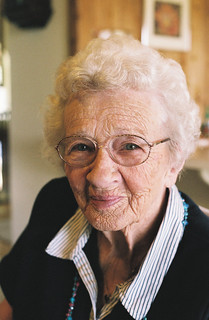
Momma’s going, quietly

When she first went into the nursing home, just before New Year's Day 2005, Momma still had her feisty side. On our frequent visits we would sit with her, asking her questions and helping her answer, when she would suddenly take notice of another resident. The change in her expression was dramatic: her lips would purse and her eyes flash raw anger, at someone whose name she could not remember and whose offense she could not explain.

Requiescat in Pace

The orderlies would struggle with her to take her medicine. “No!” she would announce, “no” being the word that she always had the least trouble with.

Then she had another stroke. Off to the emergency room, one night there, one night in intermediate care, one night in regular care, then back to the nursing home. One carotid artery was completely blocked but the other let through enough blood to keep her going. When she returned she was quiet and calm, at first.

She slowly regained her strength and her fight. She didn’t realize she had a left side but rehab gave it back to her. She didn’t like the wheelchair. She had to get up to walk, because she had places to go.

She didn’t know where she had to go, or why, but she did know that the staff and that damn ankle alarm were keeping her from getting there. Each time she made it out the door, just when she thought she was free at last, someone would catch up to her and take her back inside. She would try again. And again. And again. And again. At last the nursing home agreed that she could go, in fact had to go — to another nursing home.

We made the mistake of taking her to the new home ourselves. I drove while Terri rode in the back seat with Momma. It was a 45 minute drive, on freeways and through heavy traffic, and Momma panicked at the light and noise and commotion. She wanted out of the car even as we were doing 65 m.p.h. She would grab at the door handle, at the lock, at anything, unsure of how to operate any of it but very sure she had to get out. Terri would grab her hands and ask her to try to sit quietly. Momma would get that perturbed look on her face, clasp her hands in her lap and stare straight ahead for a few moments before again succumbing to the urge — no, the desperate need — to get out of the damn car.

The staff at the new nursing home helped us settle her into her new room. She was in Unit B, the lockdown area for ‘exit seekers,’ dementia patients at that stage in their illness where they feel compelled to get out.

A few months later, a bout of pneumonia and another trip to the hospital failed to slow her down. Then one day they found her lying on the floor on the shower room, screaming in pain. She had gotten out of her wheelchair, unnoticed, walked to an unlocked door, then slipped and fell, breaking her hip. Back to the hospital, this time for surgery, but there would be no therapy when she returned to the home.

Momma is not in Unit B any longer. She does not walk and does not try to. She does not seek exits, or entrances either. She doesn’t purse her lips any more, her eyes no longer flash anger. All her facial expressions are gone, replaced by a blank, uncomprehending stare. She opens her mouth obediently when they feed her. Sometimes she will say “yes” when I ask her a question, but mostly she just looks at me. She takes her medicine without complaint.

Momma died in 2007.

Momma's Room

Thursday, December 22, 2016

Andalucía

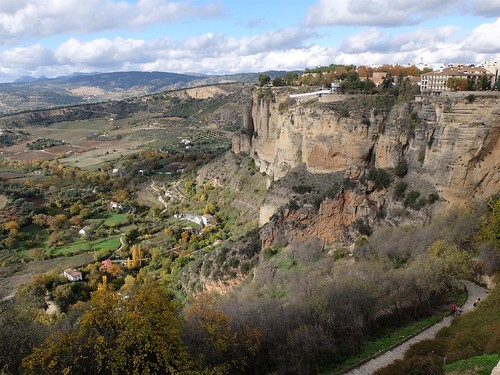
We traveled to Andalucía the last two weeks of November, visiting Córdoba, Granada, Ronda, and Sevilla. All in all, a lovely trip, with lots of interesting things to see and eat. Here's the Flickr album with all the snaps:

Spain November 2016

Thursday, November 3, 2016

The Last Flight

November 7, 1969, 11 a.m. I was getting close. After 11 months and three weeks, I had only eight more days left in Viet Nam. Helicopters were loud and tempting targets; flying a Huey meant being regularly shot at. I had been in a few scares, seen a lot of the country, the usual ups and downs of a year in a war zone. I was promoted to CW2 the month before and now with over two years service was finally making some real money, almost $500 a month plus flight and combat pay.

In most aviation units, including ours, the tradition was that if you were still alive near the end of your year-long tour of duty, you could have the last week off. So, in another day or two I could coast, stay drunk, wouldn't have to fly, sleep all day, say good-bye to all this crap, go home and eat a real hamburger and some Twinkies and drink a real milkshake.

The Ops Sergeant came by and told me I didn't pull any missions that day. Good. But I'd be the A/C (aircraft commander) on call for night missions, should any come up. Bad. That meant I couldn't drink much. But I was another day closer.

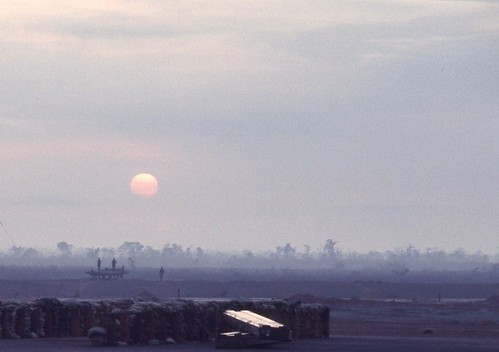
1969:  Sunrise at Long Thanh North

Dull day. Hot. Beginning the boring dry season, same high humidity, high temperature day in, day out, just like August growing up in Galveston and Houston. Listen to some Big Brother, Country Joe, throw in a little jazz. Go to bed early; one, maybe two days left of fretting, then I coast.

After midnight, I get a wake up. I have to fly to Tan Son Nhut, the big base in Saigon, pick up a guy and some equipment, take him to Lai Khe, drop the stuff off, then bring him back to Saigon. Not a big deal, just an oddball little delivery, yet, going up at night, to the Iron Triangle of all places. Shit.

We get the crew together, the ship's already preflighted, crank it. We wake up the tower operator and tell him we're going, if we ain't back in 90 minutes, send help and lots of it. Cleared for take off. Keep it low, a foot or two off the runway as we accelerate to VNE 120 knots, pull the cyclic back hard for a quick climb up to 1500', pull more power to get even higher, be thankful it's one of the new H models. Head for Saigon.

Godawful night flying. Call Bear Cat Arty, the artillery radio net, to find out which way they're shooting. They have fire missions all around the compass, big artillery rounds going every which way. Fly over some, under and around the others, zig zag towards Saigon.

Five miles out, drop down to 500', kill the lights, look out for the usual odd tracer trail from the Saigon suburbs, get clearance to land. A Spec 5 signal technician is waiting with a couple of boxes. We get him on board, take off, head north for Lai Khe, the headquarters of the 1st Infantry Division.

Lai Khe Arty is busy. It takes us an extra 10 minutes to fly around to avoid the artillery, we finally make it in, park our Huey right in front of the dinky little control tower alongside the runway, pitch down and roll the throttle back to idle. The engine stays running, the rotor beating rhythmically overhead. My crew chief helps the Spec 5 unload the boxes from our ship and into a jeep. Be back in 10, the Spec 5 says, hurrying, anxiety in his voice even as he shouts to be heard over the turbine whine. He's obviously more nervous than we are about being here, away from the safety of his home on a big air base.

We sit there, idling, listening to two or three radio channels. They're all fairly quiet except for the traffic on Arty, as they call out updates to their fire missions. It's a pretty, starry night, all things considered.

Long pauses. We hear a distant boom, a boom unlike a friendly howitzer, then the voice of the arty RTO, with a shade more energy in his voice than before. "Be advised Lai Khe has incoming! Incoming!"

Shit. Mortar rounds, rockets, who knows, I can see the stuff hitting far away but moving closer, the bad guys are walking in their shots from the outer berm, looks like they're adjusting the range, aiming for the runway, the tower -- and me. I quickly turn my head and see the Spec 5 jumping out of the returning jeep and running towards the ship. I get on the intercom and tell the crew chief, "Get his ass in now! We are outta here!"

Even before he jumps in I am rolling the throttle up and getting light on the skids. He's in, strapping down, and I pull as much collective as I can grab, push the cyclic forward, and the beautiful new H model with the shiny Lycoming engine vaults into the air as we escape into the safety of the night sky. I make my way out of Lai Khe at a sharp angle from the incoming so we don't fly into it. We get up and away, gain some altitude, turn to Saigon.

It's pushing 3 a.m. by the time we get back to Long Thanh North, gas it up, shut it down, fill out the log, put it to bed and head back to our hooches.

November 8, 1969, 9 a.m. I am catching up on my sleep, all the other crews are out flying, the hooch area is deserted. I get another wake up from the Ops Sergeant. "Mr Wegner, Mr Wegner! Get up, sir, you're leaving! Leaving Viet Nam!"

Yea, right, I think. But he wasn't kidding, I got a drop of a week, going home early, have to leave now, right now. I race around my room, hurriedly throwing stuff in bags, trying not to forget anything. I scooped up my .45 and M-16, chicken plate, classified signals book, tossed it to the sergeant with a plea to check it all back in for me. Luggage in hand, ready to go, I find out all of our ships are gone, I have to hitch a ride on a Huey from another unit that luckily happens to be headed my way.

I'm in a quiet rage. The fucking bastards made me fly on my last day. My last day! I could have been killed, a fucking night mission. No week of taking it easy, no good-bye party, no farewells, nothing. All the guys I had been flying with, living with, for a year, will come back from their missions, walk in, notice my stuff is gone. In another year they'll forget my name, I will forget theirs.

For almost a day I hurry up and wait at some transit barracks with a bunch of people I've never seen before. A few of us are waiting for a flight out, most are just arrived in country. Very few pilots, mostly Infantry lieutenants and Supply officers. For once I am proud of ratty, faded fatigues.

Finally it's time. Get on the bus, head out to the runway, climb the stairway to board the jet. A line of GIs ahead of me, a line behind, I stop at the top of the stairs, turn around and look. I pause, trying to scan it all in, hoping to imprint the scene on my memory forever. Viet Nam. It's over. I made it. I am going home.

The airliner is loaded, every seat taken, the doors are shut, the air conditioning vents are struggling to clear out the tropical heat and moisture, we taxi to the end of the runway, throttles to the wall, we're going, going, going, faster, faster, rotate for take off, wheels up, we head out to sea, to the east, ever closer and closer back to The World.

Sunday, October 16, 2016

Chartres, Dijon, and Alsace

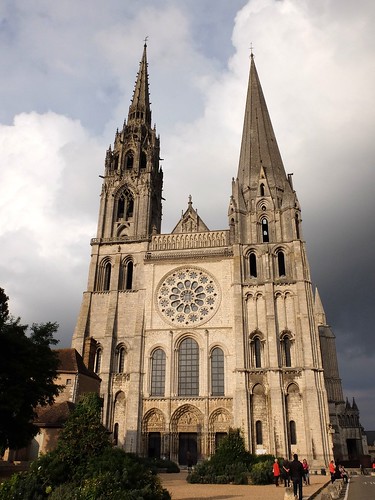
Most guidebooks recommend at least several hours, perhaps even a full afternoon, to visit Chartres, so of course we stayed three days. On prior trips to France we had planned to see the cathedral, but something always came up, we ran out of time or the weather turned cold and rainy. But this time we made it; a few hours after landing in Paris we were walking around the glorious Chartres Cathedral.

Chartres Cathedral / Day

Click on the image for a larger view on Flickr and more details.

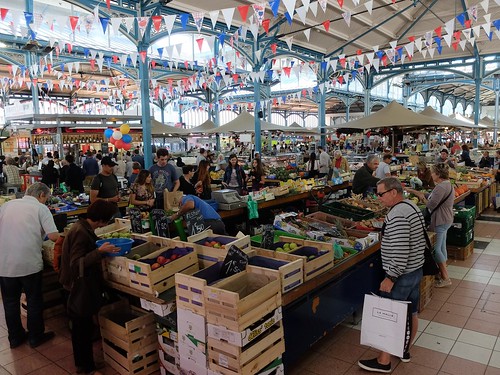
Chartres is a charming small town, very pretty and quaint, well worth the extra time we spent there. Besides sitting in the cathedral gazing in awe at the stained glass, we visited parks and museums and strolled along the river. From there we went to Dijon, not so small or quaint but still charming, with one of the nicest markets I've ever seen.

Les Halles

Dijon is the capital of Burgundy and has gained fame as the gastronomic heart of France. Unfortunately for us, we didn't eat very well. There were many restaurants to choose from but as luck would have it they ranged from average at best to downright mediocre. One place was even out of French wine, so instead tried to sell us a vastly overpriced bottle of common Italian red from Abruzzo.

From Dijon we went to Colmar in Alsace, and I had my first ride on the TGV (Train à Grande Vitesse), France's high-speed rail. There was a small electronic bulletin board in each car to display route and stops, and it also showed our speed: usually around 310-315 kmh, or about 195 miles per hour. The lovely French countryside whisked by, the train car barely swayed, and before you knew it we were at our destination. I love the TGV but should warn you, it is not cheap. Prices vary hour to hour and day to day, depending on demand, and last-minute fares can be outrageous. What a pleasant way to travel, though.

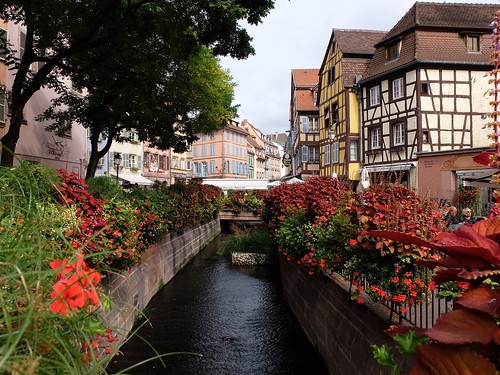
Colmar is exceedingly charming and quaint, and like many such places it is overrun by tourists. September is still high season and we had to wend our way through crowds to get to our hotel. Fortunately the throngs were concentrated in a few popular areas leaving us free to walk around quieter parts of the town. Crowds or not, Colmar is a very pretty place.

Colmar

Many people relish Alsatian food, but I quickly discovered I did not care for it. A typical dish is choucroute, a big plate of sauerkraut, boiled potatoes, and five or more kinds of meat, big slabs of ham and scarcely cooked bacon and several sausages. Painfully overloaded with meat, we had the wonderful idea to try a fish restaurant on our last night in Colmar and had the best meal of the trip.

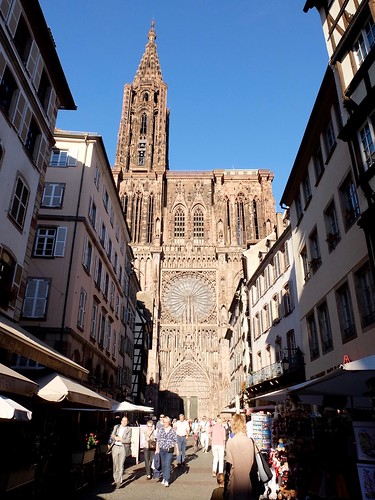
The last stop was Strasbourg, the capital of Alsace. All things considered, this was my favorite of the places we visited. Strasbourg was charming and quaint in its own way but much larger and more energetic than Colmar. Again we struggled with the heavy Alsatian food but one night found a hole-in-the-wall pizza place with a good deal on a few slices and a small carafe of wine. The owner was from Rome and we all enjoyed chatting about how good Italian food is.

Given Strasbourg's years of being part of Germany, the architecture is decidedly Prussian. The city's masterpiece is, of course, its cathedral.

Strasbourg Cathedral

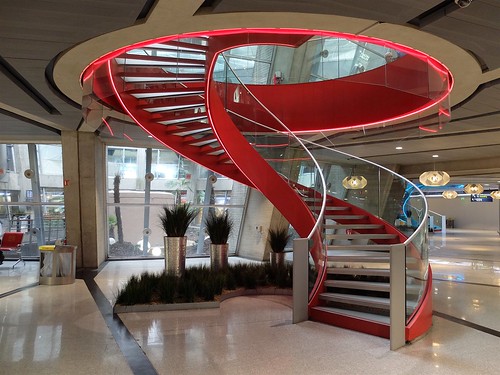
From Strasbourg it was TGV direct to Paris' CDG airport and the Ibis hotel, where we had an entire afternoon and evening to wander the terminals and find a place to eat. In Terminal 1 we saw some interesting staircases, giving me a chance to add more snaps to my Flickr staircase album.

CDG Terminal 1

There's more photos in the complete Flickr album: France Fall 2016. We're back in Fort Worth now, beginning to plan the last big trip of the year.

Wednesday, May 25, 2016

Salamanca and Segovia

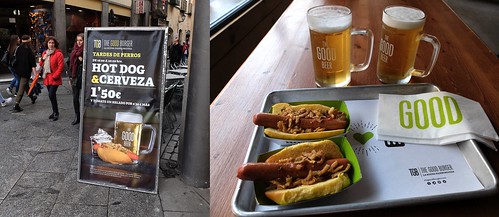
The second half of our trip to Castile began with a food find. We checked into our hotel behind Segovia's Mercado Central, put away a few things, then headed out to explore the neighborhood. We strolled around Plaza Mayor and off onto side streets, where we found an inviting sign outside a burger place: a beer and a hot dog for €1.50. Seriously?

TGB The Good Burger

Click on the image for a larger view on Flickr and more details.

Seriously. The beer was not one of those little glasses, a caña, that you usually get in tapas bars, but a big frosty mug. And while the hot dog was small, there were several varieties with toppings like garlic mayonnaise, bacon, red pepper sauce, or guacamole. We liked The Good Burger so much that we made it back every afternoon for our beer and hot dog.

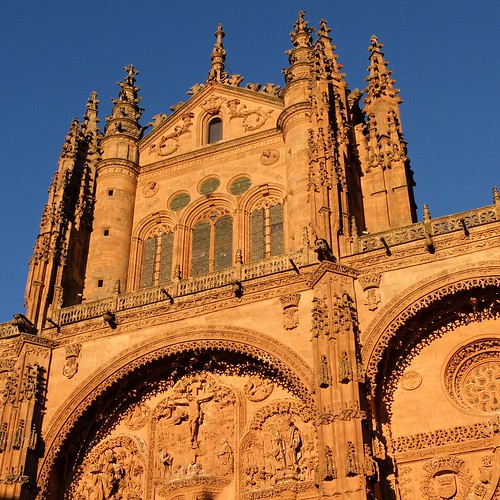
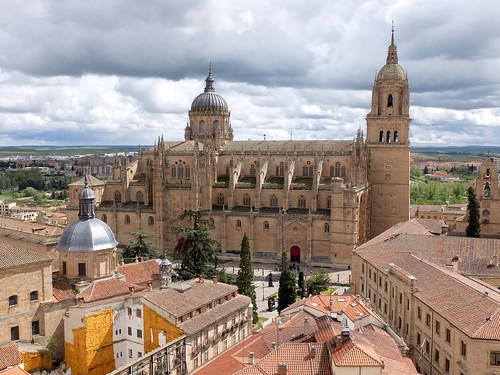
Toledo is touristy, Ávila is quaint and provincial, but Salamanca is a lively university town. I immediately fell in love with the energy of the place: lots of people, young and old, families and students and older folks like me, and lots of pleasantly bustling activity. The architecture is stunning, especially that of the university and the cathedral, and we were lucky enough that first afternoon to catch the warm light of the setting sun on the red stonework.

Catedral Nueva (New Cathedral)

There was plenty to do and see to keep us busy for three days: palaces and convents, an incredible Art Nouveau collection, tasty cookies made by nuns, parks and a Roman bridge, even a film projector museum.

Catedral / Cathedral

From Salamanca we went to Segovia where our luck with the weather ran out. It was pouring rain at the train station, raining when we got on a city bus, raining hard when we got off the bus at Plaza Artilleria under the aqueduct, and raining as we walked to our hotel.

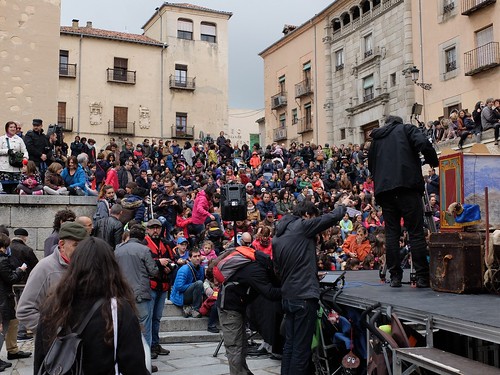
Then our luck returned. After we unpacked a few things and relaxed for a while, the sky cleared, the sun came out, and we were ready to discover Segovia. Our luck got even better as we realized what was going on: Titirimundi, the International Puppet Theatre Festival. The streets were packed with families enjoying the street performers and the squares filled with people finding a good seat for the scheduled shows.

Waiting for the Show to Begin

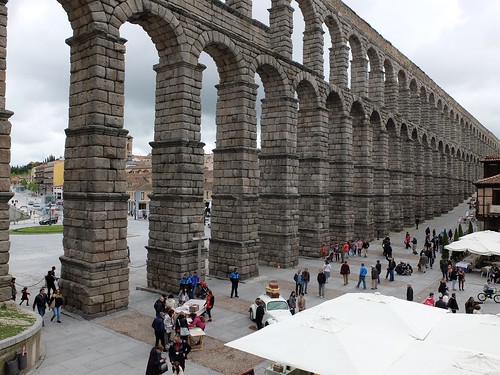
Like every other city in Europe, Segovia has food specialities, and I found two of them to be especially tasty: cochinillo (roast suckling pig) and ponche segoviano (a kind of sponge cake with pastry cream filling and a thin marzipan frosting). Segovia has beautiful churches and the famous Alacazar castle, and of course the Roman aqueduct that defines the city.

Acueducto / Aqueduct

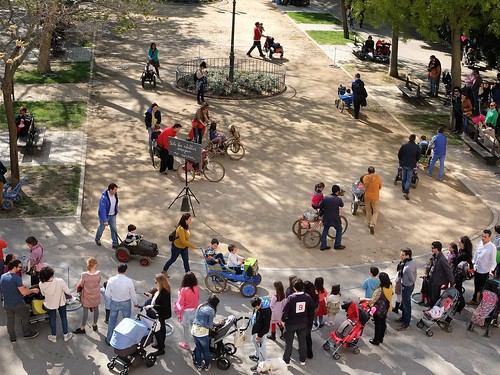
We would have enjoyed Segovia in any case, but it was an unexpected pleasure being able to stop every block or so to watch a clown, a juggler, or a puppeteer entertaining a crowd. Most impressive were Los Animóviles, fanciful mechanical contraptions made of scrap odds and ends. A kid or two would hop on one of these clackety beasts and be pushed round and round by a grown-up.

Los Animóviles

Lazy, slow travelers that we are, we've gotten into the habit of staying near the departure hub airport the last night of a trip. The alternative is to get up really, really early and make it back to Madrid, Paris, or Milan, where the flights back to the U.S. generally leave just before noon. Instead, we can take it easy on our last night and get up at a reasonable hour in time to make it to the airport.

So we took our time leaving Segovia and boarded a slow train to Madrid, where we rode the subway to an Ibis hotel in the Barajas suburb near the big airport. Looking for a last meal, we walked to the little town square, which was fortunately ringed by tapas restaurants. We picked one, Lizarran, and had one of the best meals of the trip. Rather than simply displaying tapas on the counter, Lizarran has their waiters continually exiting the kitchen with trays of hot, freshly prepared tapas. They walk from table to table, proferring the little dishes, and each diner is free to pick one or not as they choose. After several tapas and a couple glasses of wine, I had one last sit in the plaza before the short walk back to the hotel.

Sitting in Barajas

There's many more photos and a couple of videos in the complete Flickr album: Spain May 2016. Next week, there's one more trip, of a different kind, and then we rest for a bit as the summer travel season begins.

Thursday, May 19, 2016

Toledo and Ávila

I didn't think I would like Toledo. The tourist buses arrive in the morning and park in the lower town. The daytrippers head for the escalators and by 10 a.m. the upper town is awash in visitors. The entry point into the city is Plaza Zocodover (which boasts both a McDonalds and a Burger King) and the streets radiating outward are lined with gift shops selling gimmicky junk.

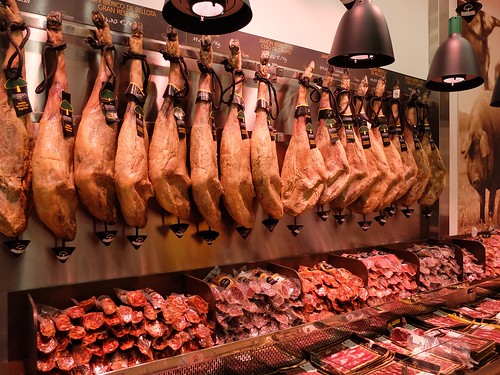
We checked into our hotel in mid-afternoon before wading into the crowds. As expected, I was not impressed and my mood soured. As we were being jostled along Calle Commercio, however, I stopped in a shop selling bocadillos jamón ibérico, a crusty bread roll filled with thinly sliced Iberian ham, for €3.50. I took one bite and thought, oh my, this is some good stuff.

Jamón Ibérico

Click on the image for a larger view on Flickr and more details.

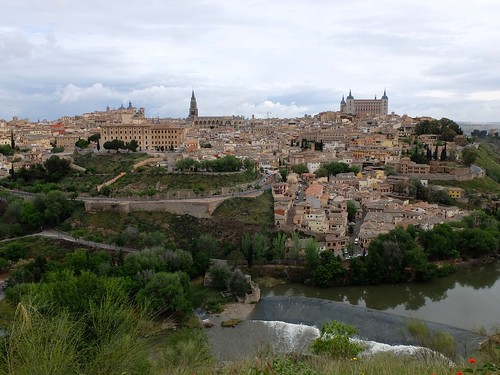
My mood was now noticeably improved and we continued our exploration of the city. The more I saw of Toledo the more I liked it. To put it simply, Toledo is a beautiful place. It's a shame that so many people see it only as a side trip, a place to spend a few hours, when we found plenty to do for three days.

Toledo

Another pleasant surprise was how inexpensive Toledo was. We had been to Madrid a few times, and Barcelona, and thought them to be pricey, but not so Toledo. We got into the tapas way of eating and in the evenings were filling ourselves with food and drink for less than €25.

From Toledo we took the bus back to Madrid then rode the train out to Ávila, famous for the intact medieval wall that surrounds the city. We arrived on the weekend marking the Coronación Nuestra Señora de las Vacas, the coronation of Our Lady of the Cows. In the 13th century, the Virgin appeared in a corral amidst some cows. What this means in the 21st century is that some young men have a lot of fun carrying Nuestra Señora around on their shoulders, accompanied by a loud marching band and everyone else in the town, with lots of loud fireworks and hurrahing.

Nuestra Señora de las Vacas

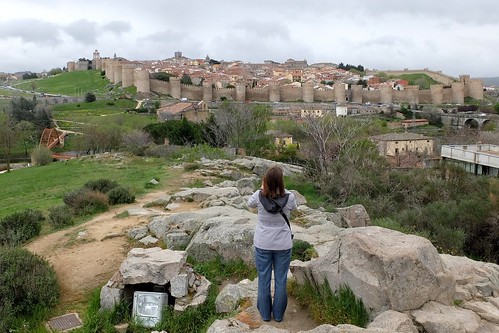
Like Toledo, Ávila is beautiful. I was completely enchanted by the lovely streets, buildings, and parks. We walked on top of the medieval walls, outside the walls, up and down the length and breadth of the old town, to several sites outside, and out to the Cuatro Postes overlook for the panoramic view.

Terri Snaps Ávila

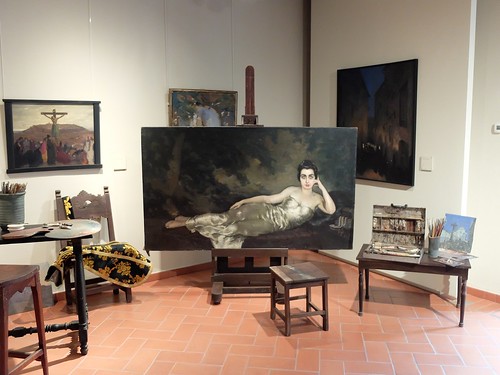
Also like Toledo, Ávila had plenty of things to do to keep us busy for our three-night stay. Among the usual local museums, churches, and convents, the Palacio de los Superunda was especially impressive. Once the home of the painter Guido Caprotti, it is now an elegantly restored museum exhibiting many of his works as well as two full-length portraits by Joaquín Sorolla.

Welcome to my studio...

Next up, a blog post with words and pictures about part two of our trip, to Salamanca and Segovia.

Tuesday, May 3, 2016

¡Vamos a Castilla!

We've enjoyed getting to know Madrid (first in 2010 and again in 2012) and frequently make connections at the Madrid Barajas airport. We've explored Barcelona. Now it's time to get out and about and see what else is in Spain.

We'll start modestly, as we usually do, and explore one region, Castile. We'll begin in Toledo then move on to Ávila, Salamanca, and Segovia. We've arranged our lodging and know the bus and train options to get from one to the other, but beyond that, we shall see what we shall see.

While you are waiting to see snaps from this trip to Spain, I offer to you my Flickr album of photos and videos from our recent visit to Chicago: Chicago April 2016.

We had a good time in Chicago, as we always do. The highlights this time were the Strandbeest exhibit at the Cultural Center, the Michigan Street drummers, and pizza at Lou Malnati's.

Since then we've had a bit of a rest so now it is time to fly away.

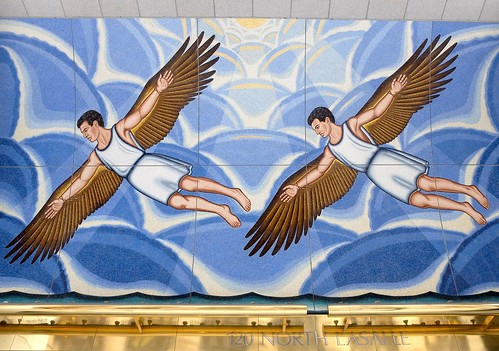
120 North Lasalle

Friday, April 8, 2016

Lille, Amiens, Paris

After a couple of trips to Paris some years ago and a visit to Lyon last fall, we wanted to try France again, this time in a new direction: northeast, to be exact, to Lille, near the Belgian border, and then Amiens followed by several days in Paris.

(The Flickr photo album of the trip is here: France / Spring 2016.)

We began easily enough by catching a bus at CDG airport. I would have liked to try the TGV, the high speed train, but the large difference in price (€9 for the bus versus €50 or more for the train) was not worth the small difference in travel time (an hour versus two hours). Besides, the bus was nice: comfortable plush seats, wifi, and a WC.

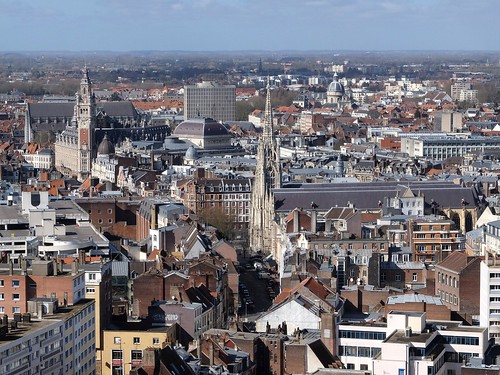
For some reason, Lille is not much mentioned in guidebooks. It's the fourth largest city in France (after Paris, Marseilles, and Lyon) and has the second largest museum (after the Louvre in Paris). We bought the city pass, which got us a walking tour of the old town, a ride on the tourist bus past all the important sites, a transport pass for buses and the subway, and admission into more museums than we could possibly visit. For five days and four nights we found plenty to do and see. And to eat.

Lille

Click on the image for a larger view on Flickr and more details.

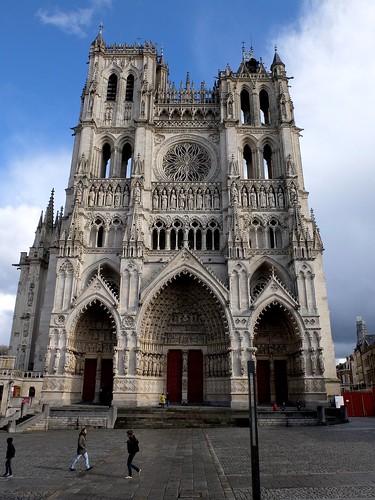
After Lille we took a regional train to Amiens. Mostly we wanted to see the cathedral -- which is stunning -- but were surprised at how pretty and pleasant the town was. Not much to do, mind you, but I was very happy to simply walk about and enjoy the atmosphere, with an occasional stop for refreshment.

Amiens Cathedral

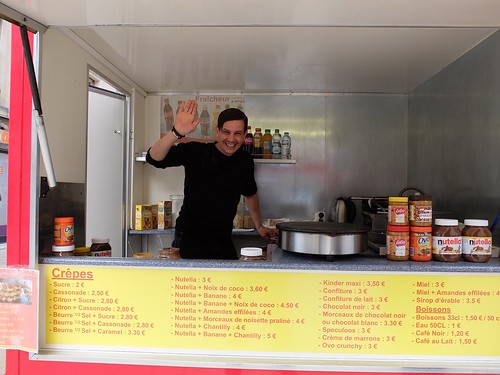
Monsieur Crêpes

Another short train ride took us to Paris, where we had booked a hotel near the Place de la République. The location was perfect, with easy access to trains and lots of Metro lines. Our room on the first night was ridiculously small, even for Paris, but the next morning we were able to move to a much larger room, with a much larger shower, and life was again beautiful.

We had already done the most obvious tourist things in Paris -- Eiffel Tower, Louvre, d'Orsay, l'Orangerie -- and wanted to stray from those well-beaten paths to know Paris a little better. Most importantly, we got new Navigo Découverte cards and unlimited Metro passes.

(A note about the Paris Metro: I love it so much that sometimes I think I would visit Paris just to ride the subway. The network design is awe-inspiring and beautiful. The only problem that I can see is that the system is at or beyond capacity. The trains cannot get any bigger, due to the size of the stations, nor can they get more frequent, since they are running only 3-4 minutes apart. Most of the trains we rode were jammed unpleasantly full.)

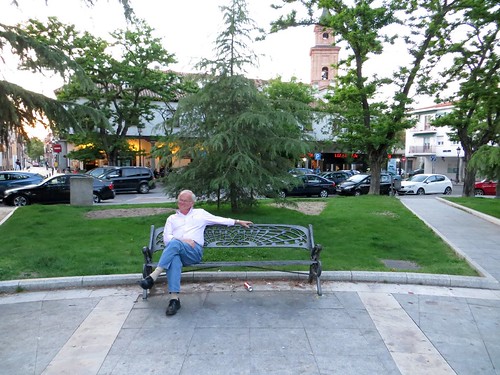
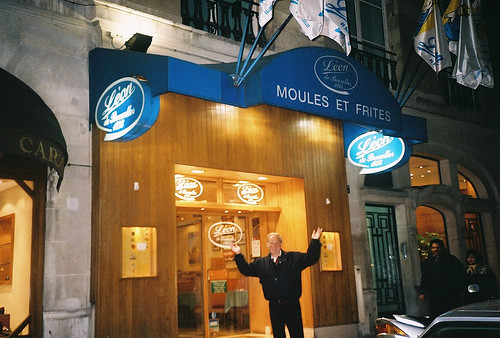
We went to museums (Jacquemart-André, Marmottan Monet, Bourdelle, Quai Branly) and walked around neighborhoods (Marais, Montparnasse, St.-Denis). With our Metro cards we were able to change our mind on a whim and head off to a different place whenever we liked. And I indulged myself more than once at Léon de Bruxelles, a prominent mid-range restaurant chain specializing in moules et frites, steamed mussels with french fries. My first meal at Leon's was way back in 2004 on our first trip to Paris.

UncaMikey loves moules

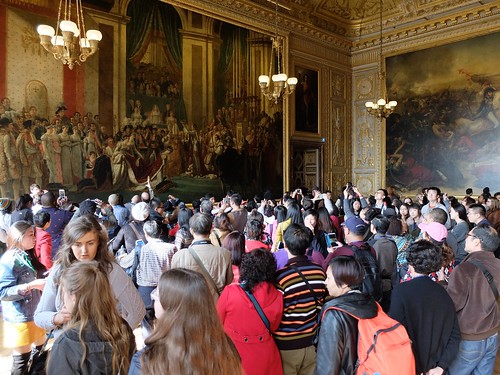
There was one bad day, and it was very, very bad. We went to the Palace of Versailles for no reason other than that it is very famous and we had never been there. The badness of Versailles has two parts. Part one, it is hideously and ostentatiously ugly, and I am not one whit surprised that the French peasantry revolted and chopped off a bunch of heads. Part two, the mobs of tourists were rude and obsessed with taking selfies. We were continually pushed back or aside so that some yokel could grin into her/his phone, snapping their visage against a backdrop of 18th century French decadence. To visit Versailles in the summer heat, when the crowds are far larger, must be a special kind of hell.

Versailles

Fortunately we quickly recovered, our Metro passes whisking us back to the sanity of Paris proper.

We understand France much better now, I think, and are already considering what regions to visit next. Alsace? Normandy? France is a large country of many cuisines and almost endless possibilities.

Monday, February 15, 2016

NY in B&W

The problems of modern society can be summed up in three words: too many options! Cable channels, cell phone plans, banking products, sneakers, coffee, beer, salsa -- why are there so many choices? Why do I have pick and choose among so many possibilities?

So it is with photography, a sometime hobby of mine. I bought my first good SLR, a Pentax, in 1969, and for almost forty years taking pictures was pretty straightforward. Choose a film -- black and white or color, slow or fast, positive or negative -- and you were set for the next 24 or 36 shots. Select a shutter speed and aperture, focus, and click!

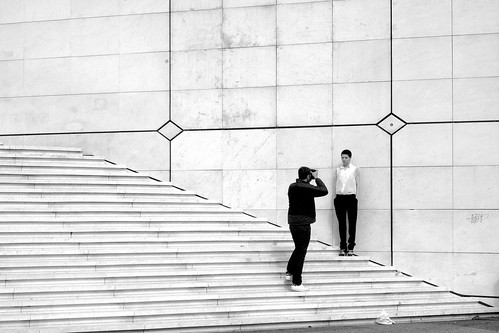
La Defense

Click on the image for a larger view on Flickr and more details.

But with the advent of digital, picture-taking got both a lot easier and a lot more complicated. My current camera, a Fujifilm X30, handles well and takes great photos, but before I snap the shutter I have to think about much more than speed, aperture, and focus. The 'quick' menu has 16 different parameters covering things like aspect ratio, file size, IS mode, metering mode, type of color or film simulation, face recognition, noise reduction, and dynamic range. That's child's play compared to the full menu system: screen after screen, hierarchies of screens, options and more options.

Taking snaps, I've found myself at times overwhelmed by what ifs? Should I use the low-light mode in that shot? What about that cute toy camera effect, or the soft portrait option? And once I decide to shoot something a little differently, I have to remember where it is in the menus, and just as importantly I have to remember to turn it off after I click the shutter.

Robert Frost famously said that writing free verse (poetry without rhyme or meter) is like playing tennis without a net. That is, rules and restrictions provide a framework that force you to concentrate on what's important. Without such boundaries, we tend to wander aimlessly. So, I've decided to come to terms with my camera by mostly shooting as if it had film in it, ignoring 95% of the options and instead paying attention to the basics. And I am going to follow this road of simplicity even further on our upcoming trip to New York: black and white only, contrast and tone, no color!

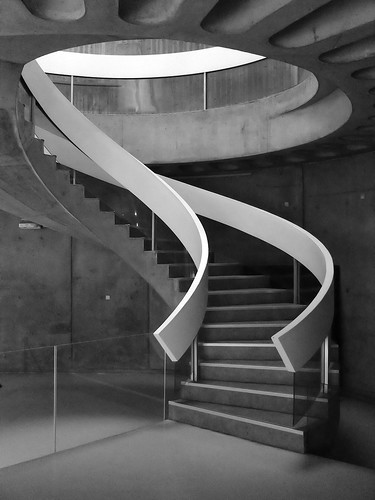
Staircase

Monday, February 1, 2016

It's a Musical!

Before our most recent trip to New York City, I had never seen a Broadway musical. The day we arrived, we went to see Kinky Boots. The next day we saw a taping of The Late Show with Stephen Colbert then in the evening saw An American in Paris. The third day we went to a taping of The Nightly Show with Larry Wilmore. The fourth and final day we saw Something Rotten. All these shows were entertaining, of course, but I have now seen enough Broadway musicals and taping of TV shows.

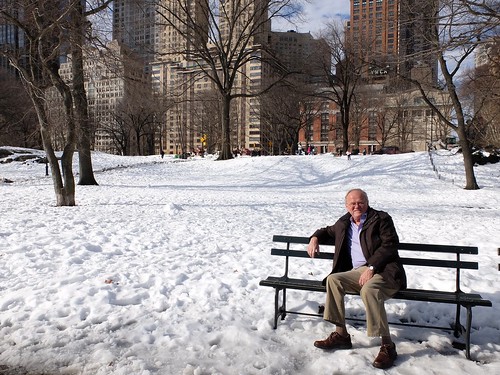
It wasn't all song and dance, however. We walked around Times Square and Rockefeller Plaza and strolled through the snow in Central Park and along the Upper West Side. We visited Trinity Church (and Alexander Hamilton's grave) and St. Patrick's Cathedral. We saw the Sorolla paintings at the Hispanic Society of America in Washington Heights and spent an afternoon at the Frick Museum. We were awed by the beautiful and moving 9/11 Memorial downtown. There was even time for stops at the New York Public Library, Bryant Park, and Grand Central Station. Amidst all this rushing about I sometimes had to sit down for a rest.

Central Park

Click on the image for a larger view on Flickr and more details.

(We arrived just two days after one of the biggest snowstorms in New York history. We saw snow everywhere, piled up along curbs, in the middle of the street, along the sidewalks, but it had no effect at all on the life of the city. New York had done a remarkable job of bouncing back and getting on about their business.)

I wasn't especially pleased with my snaps on this trip. It was cold and whenever we were on the streets we were bundled up, making it difficult to reach in my coat and get my camera out. But I did get a few snaps worth sharing, in this Flickr album: A Few Days in New York City.

This was our first visit to New York since 2007 and we liked it so much that we're going back in less than three weeks. American Airlines is offering round-trips from DFW to LaGuardia for $81; with a fare like that, who can resist?

Sunday, January 17, 2016

On Diplomacy

In these early days of presidential primary season, virtually all the Republican candidates are calling for vigorous military action against our enemies, real and imagined. Obama is weak! Carpet bomb ISIS! Our military will be so strong no one will dare challenge us!

Such talk makes me ill. Almost 50 years ago, I was in Vietnam, a UH-1 (Huey) helicopter pilot for the U.S. Army. For a year, from 1968 to 1969, I flew missions as part of a crew (two pilots, a crew chief, and a gunner). We always flew by ourselves, a single ship, sometimes in air traffic jams around huge airports like Tan Son Nhut (Saigon) and Bien Hoa, sometimes alone in the sky for miles and miles, eventually landing in a soccer field next to a school, on a bare piece of dirt alongside a canal, or on top of a mountain. We went into the southern Highlands, Song Be, out to the coast, Phan Thiet, and deep into the Mekong Delta, Ca Mau.

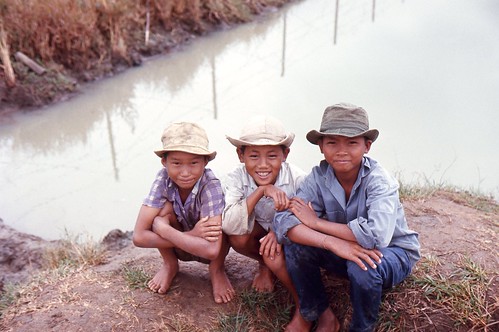
Many times we would land to be greeted by kids. Smiling, happy kids, in awe of our aircraft, eager to see it, and us, up close. These young fellows below are middle-aged men now, if they are still alive, which I most dearly hope they are.

1969:  Sa Dec

Vietnam was hot so I often flew at some altitude, into cool dry air, to escape the heat. The green fertility of the tropical country was overwhelming, nature unleashed to grow as much and as fast as she could manage.

Losing altitude made the damage to the country sickeningly apparent. Vast forests had been sprayed with Agent Orange, leaving bare trees and lifeless soil. Arclight strikes, massive raids by fleets of B-52 bombers, left miles of bomb craters disfiguring the landscape.

The U.S. then had, and has now, the mightiest military in the world. At the peak of the war, when I was there, we had well over 500,000 troops in country. (Compare this to the Iraq war, when our strength peaked at 170,000 in 2007.) As for carpet bombing, by the time the war was over we had dropped over 7 million tons of bombs on Vietnam, Laos, and Cambodia -- this is twice (yes, TWICE) the total of all bombs dropped in Europe and Asia in World War II. We lost over 58,000 soldiers, sailors, airmen, and Marines. Estimates of total deaths caused by both sides range from 1.5 to 3.5 million people.
After all this, we lost. No other outcome was possible. The Vietnamese were fighting for their own country, spurred by hopes of independence and freedom from foreign domination. The Vietnamese fighting on 'our' side gave up, having nothing to fight for; their own government was unbelievably corrupt and at the end fled to the U.S. and Europe with tons of gold.
The widespread destruction I witnessed in Vietnam convinced me that never again would the United States commit so many resources to such a senseless and foolish war. How wrong, how very wrong, I was. Now, in 2016, some Americans want to do it all again. They want to waste dollars and lives in a vain attempt to, what? Fulfill some hapless leader's egotistical fantasy? Prove to ourselves that we are tough and fearsome? While the rest of the world cries out, the Emperor has no clothes.

Thursday, January 7, 2016

Bronze Age

We're beginning the new year with a short trip to Washington, D.C. There's always things to do in the nation's capital, but the special reason for this trip is the exhibit Power and Pathos at the National Gallery, an impressive display of 50 Hellenistic bronze sculptures.

(Quick history refresher course, if you're interested: The Hellenistic period begins with the death of Alexander the Great in 323 B.C. and ends in 31 B.C. with Octavian's victory over Antony and Cleopatra at the Battle of Actium. During these three centuries, Greek culture, art, and science dominated the Mediterranean world.)

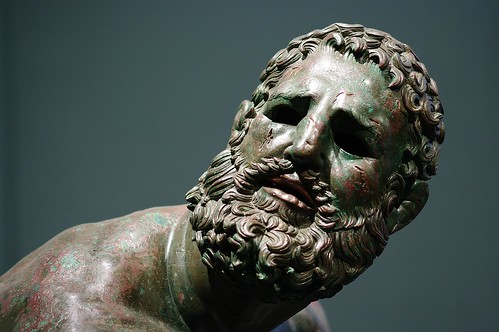
There are not many of these sculptures still in existence, and the ones that remain are scattered all over. Usually you have to travel far and wide to see individual pieces. Back in 2002, on a car trip through Italy's Le Marche region, we visited the small town of Pergola to see the magnificent Gilt Bronzes from Cartoceto di Pergola. In 2009, during a trip to Rome, we oohed and aahed over this life-size figure, called simply The Boxer.

The Boxer

Click on the image for a larger view on Flickr and more details.

We're staying at a hotel near the Mall and a couple of Metro stops, so we'll be able to wander about and find other stuff to look at. If they're interesting enough I'll blog about them or maybe even take a snap or two.

Tuesday, November 17, 2015

The Scooters of Lyon

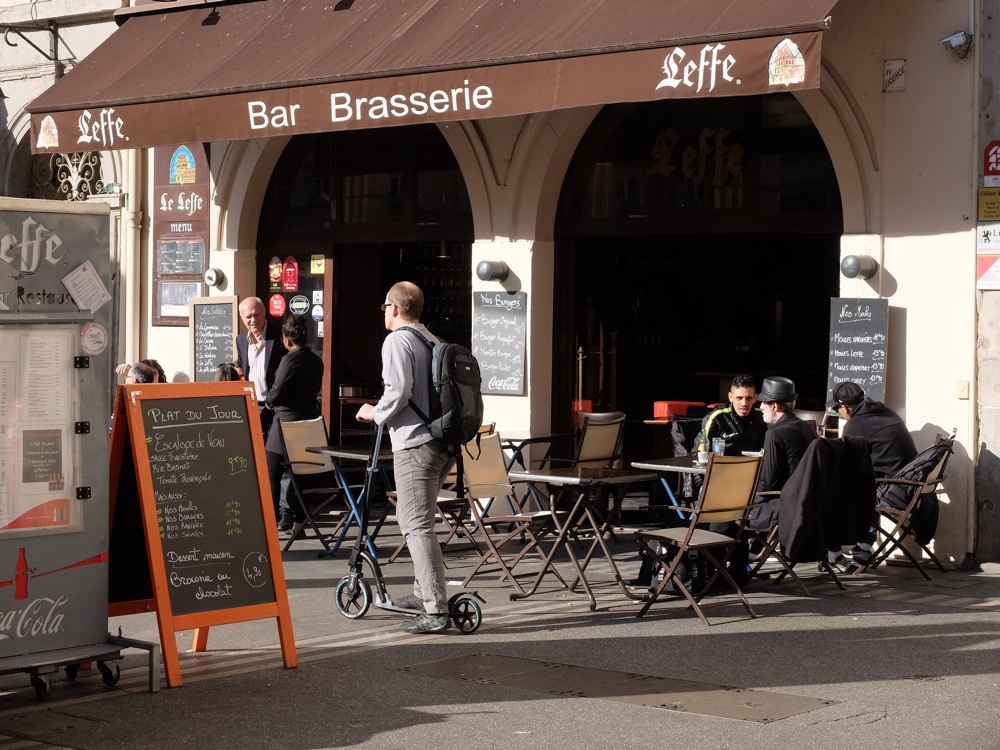
As in most European cities, Lyon's streets and sidewalks are a busy mixture of pedestrians, motor scooters, bicycles, buses and trams, cars, and even skateboards. Add to this mix something new, at least to me: scooters. Yes, scooters, the kind where you push yourself along with one foot while grasping a small set of handlebars connected to a steerable front wheel.

The first one I saw almost ran us down. The Lyonnais are quite nimble and proficient, able to zip with ease around and through crowds of mere pedestrians. Bicycles and motor scooters have to go in the street, contending with the dangers of cars and trucks, but scooters use the sidewalks.

The scooter riders (drivers? users? daredevils?) cut across all age groups and demographics: small children, students, GenXers and millenials, professionals, a few almost as old as me, alone or in groups, sometimes whole families.

Here then is my small selection of snaps of scooters in Lyon. It's not easy to take a photograph of someone on a scooter. They are upon you and past in a flash, so many of my snaps are of the scooters receding in the distance as I fumble with my camera.

Wednesday, November 4, 2015

A Week in Lyon

The flocks of summer tourists have flown home by now, back at their daily grind of work or school. Souvenir stands are shuttered. English-language menus are gone from restaurant windows. Pickpockets and petty thieves have migrated to warmer climes. In short, Europe has largely returned to a life of normalcy.

Thus it is time for us to leave our apartment in Texas for a new adventure. There is still much to see and do in Italy and Portugal but today we're striking out in a new direction: France! We've been to Paris a couple of times but the rest of the country is unknown to us.

We're flying to Madrid and then on to Lyon for seven nights. Lyon, the gastronomic capital of France, has been at the top of my to-go-to list for quite a while. Just north of the city lies Beaujolais and beyond that, Burgundy, while south are the vineyards of the Rhone. At the very least, we will not go hungry or thirsty.

As usual, the language will be a challenge. We are trying to learn the words for all the varieties of organ meats like brain and tripe so that we don't accidentally order any. I do know that I must be as polite as possible. Bonjour, madame! S'il vous plaît! Merci! Bonsoir, m'sieur! But I probably should go easy on the exclamation marks.

Saturday, September 26, 2015

Nigel and the Pope

As his eyes slowly opened, he became aware of the faint morning light, the first vague shadows emerging from the darkness. Beyond the gauze curtains, rippled by the warm breeze, he could see sunlight upon the terrace. He sat up and noticed the disarray about the room: his tuxedo, her gown, the empty bottle of Cristál. And beside him, Aliá, still asleep, facing away from him, the sheet turned down to her thighs in the heat, the indentation of her spine and the smooth curve of her hip reviving in his mind the consuming desire of only a hour before.

The .45 automatic, a large and elegant N filigreed into the ebony grips, was on the bedside table. Picking up the pistol, he firmly but quietly pulled back the slide then eased it forward, chambering a round. There was work to do today, payments to be made, contracts to be filled.

He reflected for a moment on the turmoil and violence of his existence, the moments of passion stolen from the days and nights of confrontation and death. How different, how very different, from those simple days on his father’s estate, the carefree days frolicking about the grounds, safe from the world’s terrors. And his dear nanny, Deirdre, always stern and proper when his parents were about, but so affectionate and devoted when they were away from prying eyes. His life had been turned upside down when she left to marry that doltish dustman Archibald. Ah, Deirdre, he thought, if we could have frozen space and time and the farthest reaches of the cosmos, if we could have stayed forever within a world of our own making, if we could have.

But of course they couldn’t. He turned and lightly stroked the small of Aliá’s back. In his mind he again said goodbye to fair Deirdre, then smiled as he thought, if only I had known what was to follow. The reflection ended, the smile gone, he knew it was time to get moving.

An hour later he was quickly pacing back and forth across a large room, oblivious to the elegant furnishings, the ornate wall hangings, the echoes produced within the 30 foot ceiling. He chain-smoked as he walked, hesitating slightly whenever his cell phone rang only to be ignored. “Damn him!” he thought. “He must come through! And it had better be quick!” He could hear the sounds of an immense crowd outside. “Jesus, all those people acting like sheep, crowding into the square, whenever he decides to show his bloody face! Just so they can hear him pontificate some stupid bullshit! ‘Blessed Pontiff’ my ass!”

After several more circuits of the room and not a few cigarettes, he abruptly stopped as the doors opened, and in walked the Holy Father himself, accompanied by three red-robed cardinals.

“It’s about fucking time! Couldn’t you have cut the crap short today?” The pope smiled wanly at this stern rebuke, as the cardinals raised their eyebrows and opened their mouths in silent gasps.

“Tell these guys to beat it; you and I have to talk.” The pope, showing the debility of age, turned stiffly to the cardinals and made a slight hand gesture, bidding them to leave the room. After they had left and closed the huge doors, the pope finally spoke.

“Now, my son, please, let us talk.”

“There’s not much to talk about. It’s quite simple. You, the great and powerful Holy Father, started this mess. You stirred things up with that Papal Bull, you brought back Deirdre to be involved in this harebrained scheme of yours, then you left me in the lurch. I expect you to finish it, and quickly. If you don’t, you’ll need more than that bloody Popemobile to protect you when you go to Rio.”

Sunday, August 2, 2015

Write About What?

Fingers poised above the keys, he was ready to begin writing. Yes, write, but about what? He would think of something, a subject would present itself, some topic would drift into his consciousness, and then he could get down to the real business of writing. He would assemble words and sentences and paragraphs with rigor and precision and even passion, crafting prose that awed with its brilliance and wooed with its ardor.

Politics was out. Everybody talked and wrote and screamed about politics. Not only had everything already been said, it had all been said too many times over and over. Besides, no one wanted to listen about politics, they only wanted to be heard. No, no, politics would never do.

Religion? Pass. He worked all that out in his head over 50 years ago and had nothing more to say.

Art presented possibilities. Everybody loved at least some kind of art, painting or pop music or decorative plates or video-on-demand. Art could be sad or funny, inspiring or insipid, and you could say ridiculous things with big words and somebody somewhere would take you seriously. On second thought, maybe writing about art was not a good idea.

Between art and politics and religion was culture. Ah, modern society. There might be some heretofore unseen insights that he could discover and share. This was a fertile field full of social media, clash of generations, riches and poverty, the –isms of race and sex, the complexities of being human in an increasingly inhuman, impersonal world — he perhaps could make new connections to startle and illuminate.

Yes, culture. His fingers relaxed slightly as he thought about culture. He thought some more as he pulled his fingers away from the keyboard and placed his hands in his lap. Still thinking, he turned to look out the window. It was hot out there, sun glaring, and he had to get up and close the blinds a bit to keep the room cool. That’s better now, he thought as he sat back down and started thinking about culture again.

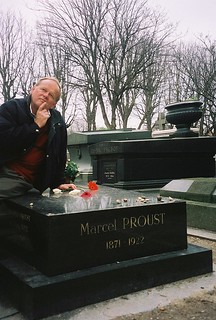
Culture was really human nature writ large and to do that any justice one needed to write a novel, even a trilogy, or a big heavy book of history or philosophy. Proust wrote a gazillion words and even he couldn’t cover it all. The more he thought about it the more he felt that it was a bit more than he wanted to tackle, not right now anyway. Maybe next week.

UncaMikey visits Marcel

Technology is a popular topic and people always seemed eager to learn about the latest gadgets and trends, but he didn’t own a smart phone and wasn’t quite clear on the concept of Twitter. Thirty years ago one could make jokes about not being able to set the time on the family VCR but that was child’s play, today it’s all a blur, clouds and streaming and hashtags and trending topics. He wasn’t ready to write about technology but was open to reading about it. Tomorrow, maybe.

He noticed it was late afternoon and that he was getting a bit drowsy. His fingers were no longer ready to pounce on the keyboard and his brain had given up the search for a suitable subject. His passion for words had waned as his body felt the inexorable pull of the couch. Creativity yielded, as always it must, to lethargy. It was time to lie down and take a nap.